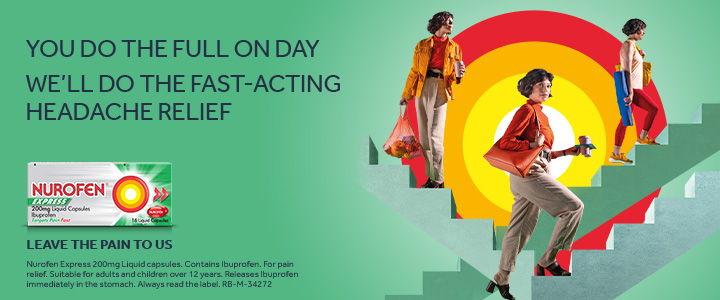
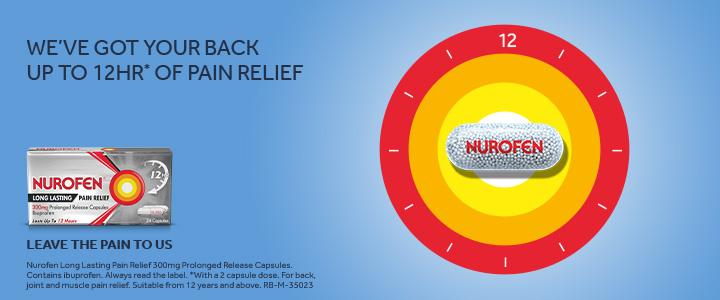
Nurofen products are clinically proven to provide relief from a huge range of pain. From those niggling headaches, to persistent back pain and even the symptoms of flu, they have perfected a range of products to help target pain, right at the source.
Nurofen’s success is the result of over 25 years of research & development. Look at their heritage and you’ll see that the founders of the brand were the first chemists in the UK to use Ibuprofen for the treatment of pain. The Nurofen dosage is 100% safe when taken as advised on the packaging. Please refer to individual products for recommended dosages.
What Is Ibuprofen?
Ibuprofen is a NSAID (Non-Steroidal Anti-Inflammatory Drug) - the term used for a whole group of medications that have pain relieving and anti-inflammatory properties. It therefore works at the site of pain by blocking the production of the chemicals that cause pain and inflammation in the tissues of the body (these chemicals are called prostaglandins). Salt formats of ibuprofen such as sodium and lysine are modified versions of the NSAID, ibuprofen. Because they are both more water soluble than ibuprofen acid, they help the painkiller dissolve faster.
What Can It Be Used For?
It is effective for headache, fever, neuralgia and symptoms of cold and flu. It is also especially effective on pains such as dental pain, period pain, rheumatic pain, muscular pain, backache and any pain accompanied by swelling.
A First For Children
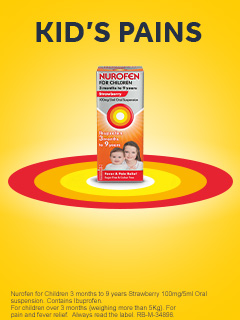
As well as discovering ibuprofen, Nurofen was also the first to develop over the counter ibuprofen-based pain-relief for babies and children – launched as Nurofen for Children in 1998. This ibuprofen suspension can give fast, effective relief from pain, fever and high temperatures for babies and children as young as three months (providing baby weighs more than 5kg).
Can I take Nurofen if I’m pregnant or breastfeeding?
There is no evidence to show that taking Nurofen is safe for women who are pregnant or breastfeeding. So we would advise you to avoid taking it if you are pregnant or breastfeeding.
I’m allergic to aspirin, can I take Nurofen?
Please don’t take Nurofen if you’ve ever had an allergic reaction to aspirin.
Can I take Nurofen if I’ve a stomach ulcer?
You shouldn’t take Nurofen if you’ve ever had stomach bleeding (or perforation of the stomach or bowel).
What types of pain can I take Nurofen 200mg Tablets for, without seeing my doctor?
Any type of pain you’re familiar with. For instance, headaches, cold and flu pains, dental pain, period pain, back pain, muscular and rheumatic pain, and migraines. However, if your pain is severe please see your doctor.
Can I take Nurofen if I’m taking prescribed medicine(s)?
Always consult your pharmacist or your doctor before taking Nurofen with other medicines.
When should I take a painkiller?
As soon as you feel pain start.
Do I have to eat before/when I take Nurofen?
No. Nurofen doesn’t need to be taken with food.
Who can tell me what type of painkiller I should take for my pain?
Your local pharmacist will help you. However, if you’re in severe pain or your pain goes on for longer than you think it should, please speak to your doctor.
There have been some questions over the use of cold and flu remedies for small children recently? How does this affect Nurofen for Children?
Nurofen for Children products are designed to help relieve pain and fever and are analgesic based. Such medicines are not included in the recent discussions relating to children's cold and flu medicines.
Nurofen warnings at-a-glance
- Always read the label and the leaflet
- Never take more than the recommended dose
- Do not take if you are taking other medicine containing NSAIDS or aspirin with a daily dose above 75 mg
- Always check with your doctor or pharmacist if you’re unsure about taking Nurofen.