- Home
- About Bioconcepts
- In The Press
- Premium Quality
- Price Comparison
- Our Values
- Customer Testimonials
- Money Back Guarantee

- Childrens (44)
- Eye Supplements (27)
- Fish Oils (112)
- Ginseng (18)
- Herbal Supplements (81)
- Joint Care (103)
- Lifestyle (310)
- Mens Health (103)
- Minerals A-Z (142)
- Slimming (83)
- Vitamins A-Z (222)
- Womens Health (159)

- UK's Number 1 Online Pharmacy
- FREE Fast Delivery
- Express Delivery
- Confidential & Discreet
- Regulated & Approved Pharmacy
- Secure Shopping
- Run by UK Pharmacists
- Genuine UK Sourced Medication
- UK Based Call Centre


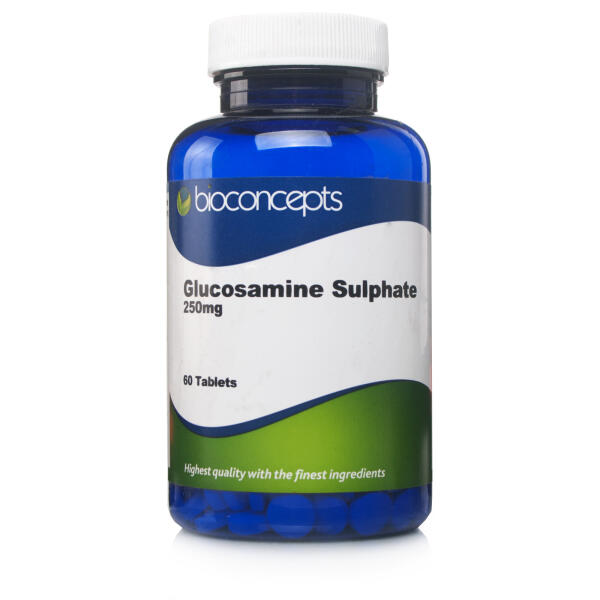
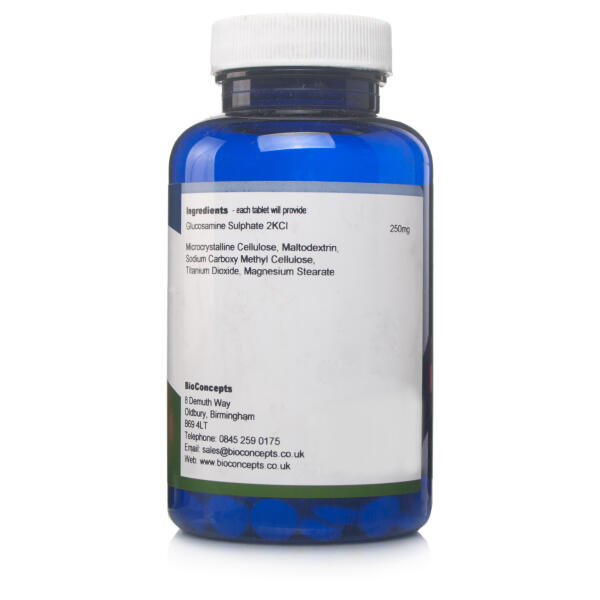
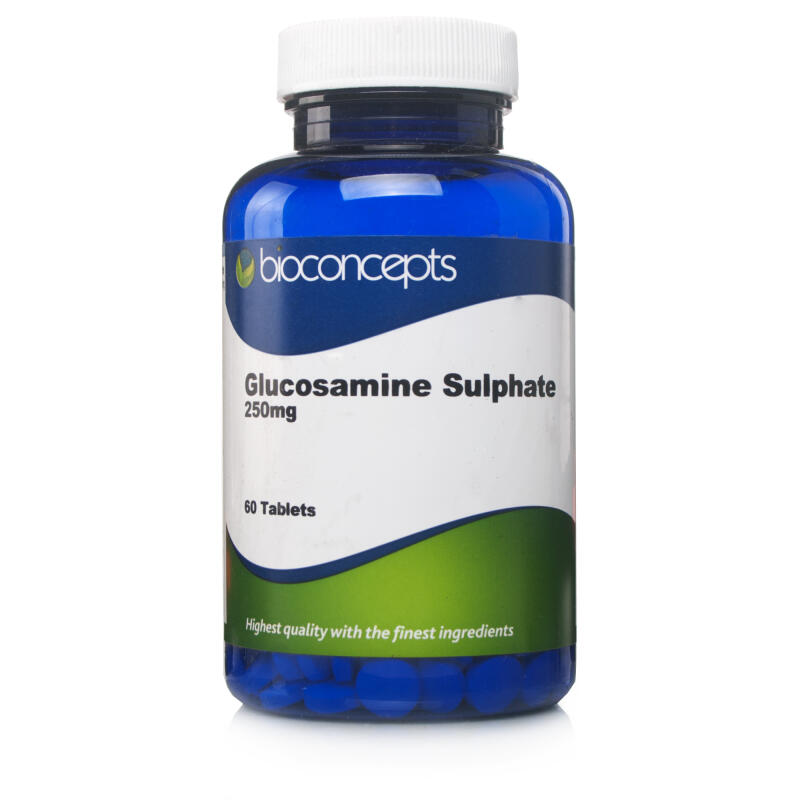
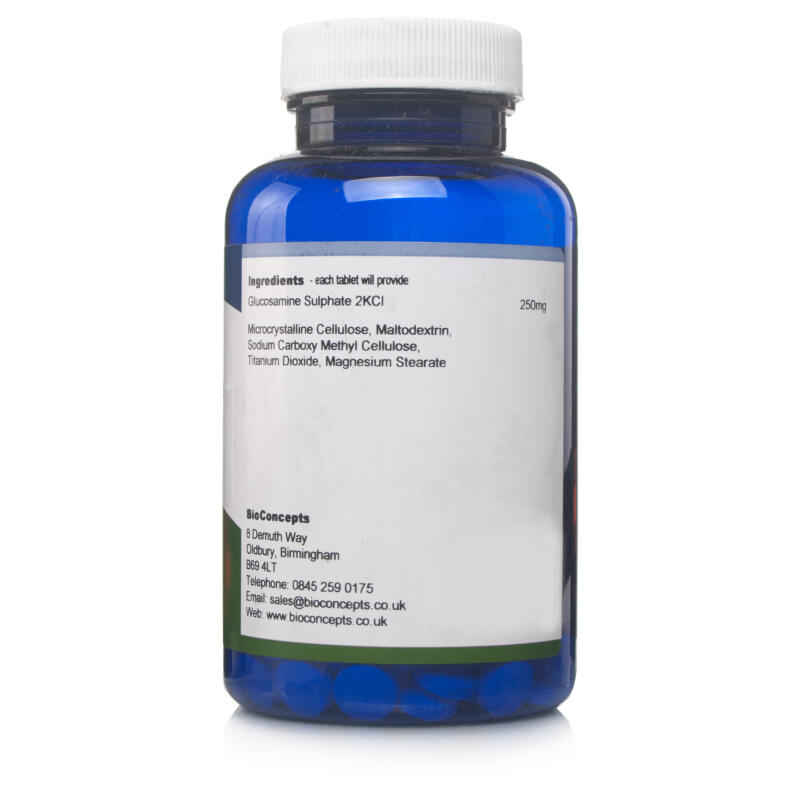
- 1000mg Pure Glucosamine Sulphate 2KCL
- Contains the finest ingredients
- Helps maintain healthy joints with good flexibility and mobility
- Improves joint pain caused by injuries, accidents and general wear and tear
Glucosamine helps support & maintain joint health
- 1000mg Pure Glucosamine Sulphate 2KCL
- Contains the finest ingredients
- Helps maintain healthy joints with good flexibility and mobility
- Improves joint pain caused by injuries, accidents and general wear and tear
What is Glucosamine?
Glucosamine is a compound found naturally in the body, made from glucose and the amino acid glutamine. Glucosamine is needed to produce glycosaminoglycan, a molecule used in the formation and repair of cartilage and other body tissues. Unfortunately, natural production of glucosamine slows significantly with age so from as early as your mid 20s, glucosamine supplementation can be necessary to help maintain healthy joints and to improve joint flexibility and mobility.How does Glucosamine work? The science behind the secret...
Glucosamine plays an important part in the production, maintenance, and repair of cartilage (a cushion that exists between the meeting of two bones) that prevents them from rubbing against each other creating pain as we move. It also helps form ligaments, tendons, and nails.
Our joints should produce a sufficient amount of glucosamine naturally within our bodies to keep our cartilage in good condition. If this does not happen, cartilage can dry out, degenerate, crack, and may even completely wear away. Left unprotected, joints can become swollen, stiff, inflamed, tender, and painful, leading to osteoarthritis.

It is glucosamine that stimulates the production of the two essential building blocks of cartilage - glycosaminoglycans and proteoglycans, which helps to slow down this degenerative process and maintain joint health
Recent Studies
Study 1: Glucosamine & Osteoarthritis
Glucosamine supplements are widely used for osteoarthritis, particularly knee osteoarthritis. In osteoarthritis, cartilage -- the rubbery material that cushions joints -- becomes stiff and loses its elasticity. This makes the joint prone to damage and may lead to pain, swelling, loss of movement, and further deterioration.
Since the body's natural glucosamine is used to make and repair joint cartilage, taking glucosamine as a nutritional supplement is thought to help repair damaged cartilage by augmenting the body's supply of glucosamine. There is promising evidence that glucosamine may reduce pain symptoms of knee osteoarthritis and possibly slow the progression of osteoarthritis. For example, a study published in the journal Archives of Internal Medicine examined people with osteoarthritis over three years. Researchers assessed pain and structural improvements seen on x-ray. They gave 202 people with mild to moderate osteoarthritis 1,500 mg of glucosamine sulphate a day or a placebo.
At the end of the study, researchers found that glucosamine slowed the progression of knee osteoarthritis compared to the placebo. People in the glucosamine group had a significant reduction in pain and stiffness. On x-ray, there was no average change or narrowing of joint spaces in the knees (a sign of deterioration) of the glucosamine group. In contrast, joint spaces of participants taking the placebo narrowed over the three years.
Study 2: What type of Glucosamine is best?
Glucosamine sulphate, as used in the clinical study outlined below is the type used in all Bioconcepts Glucosamine products as it is the most widely researched and studied format with the most evidence to support its performance in improving osteoarthritis symptoms.
Importantly, a report from the Arthritis Research Campaign states:
Despite some mixed results, the majority of trials that have evaluated the effectiveness of glucosamine sulphate demonstrated significant clinical benefits when compared to placebo or NSAIDs. Evidence from trials on glucosamine hydrochloride is scarce and much less convincing. The medication, in both sulphate and hydrochloride preparations, appears to be safe with only mild and infrequent adverse effects.
Studies also show the longer term benefits of taking Glucosamine vs other painkillers.
Effectiveness of Glucosamine Sulphate Vs. Ibuprofen

Although results are seen faster with NSAIDs, the benefits typically do not last as long, and other serious side effects such as long term joint damage are possible. Glucosamine Sulphate has been shown to reduce joint pain as well as increase joint space as shown on x-rays.
Effectiveness of Various Treatments

In this study, glucosamine (red) performed better than placebo (grey), NSAID alone (blue), or NSAID plus glucosamine (green). Results were monitored after discontinuing the treatment showing the glucosamine patients maintained some of the benefits whereas in the NSAID group (blue) pain returned at a faster rate. Current recommendations for glucosamine are to take it until maximum results are felt, and then use it in alternating months.
Is Glucosamine right for me?
Anyone from their mid 20s onwards who is keen on maintaining healthy joints with good flexibility and mobility should consider a Glucosamine supplement as part of their daily nutrient intake.
Younger people can use Glucosamine from a maintenance perspective to help delay the onset of arthritis and continue to enjoy sporting activities.
Anyone over the age of 30 should take Glucosamine to help improve joint pain caused by injuries, accidents and most importantly general wear and tear and to significantly improve the painful and debilitating loss in movement caused by the onset of arthritis.


In The Press
Glucosamine sulphate for painful joints
Health Article: Daily Mail:
One of the key building blocks of the structures which form the framework for collagen to model onto is glucosamine, and has been hailed in recent years as a valuable supplement for anyone who may be suffering with joint problems and general stiffness.
Glucosamine, a natural sugar, is believed to help swelling, inflammation, osteoarthritis, slipped discs and sciatica by maintaining the viscosity of joints, stimulating the repair of torn or worn cartilages, and inhibiting the enzymes that may break cartilage down.
It also appears to be beneficial in treating uveitis, a disease in which the iris and focussing muscles of the eye become inflamed. Research has demonstrated that it can be effective in relieving pain and increasing the range of motion among sufferers with osteoarthritis of the knee, and other research has even claimed its effectiveness as being equivalent to a standard dose of Ibuprofen.
Glucosamine seems to be most effective using a larger dose initially, and then reducing it slowly to a maintenance dose once the beneficial effects have started to appear. Diabetics should be aware that this food supplement can upset sensitive sugar balances.


How to Improve Joint Health
Nutrition
Tip 1: Eat at least 5 different fruit and vegetables a day & oily fish as they may help maintain healthy cartilage.
Tip 2: To maintain good hydration and a flow of nutrients to the joints, drink 6-8 large glasses of water a day.
Tip 3: Excess weight puts your joints under extra stress. So if you are overweight, consider going on a diet – try chemistdirectdiets.co.uk
Tip 4: Good joints require regular physical activity as this maintains the muscles around the joints strong and replenishes lubrication to the cartilage of the joint.
Tip 5: Try a fitness programme that includes walking, swimming or cycling, along with stretching exercises.
Try these:
- Walk the dog for at least 20 minutes
- Walk to the shops and getting the bus back
- Cycling - you can always stop for food somewhere
- Get a workout video of maybe gentle yoga or tai chi as stretching the simplest way to keep joints and muscles flexible and it's a good stress buster too.
- Swimming or water aerobics as water reduces wear and tear on joints as it is a non weight bearing exercise
- Over 70% cheaper than Holland & Barratt