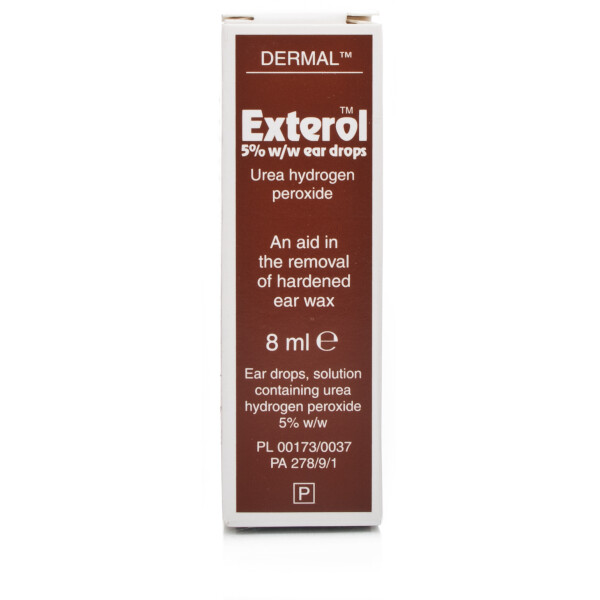
The name of your treatment is Exterol. It contains 5% w/w urea hydrogen peroxide as the active ingredient. It also contains the inactive ingredients 8-hydroxyquinoline and glycerol. Exterol is a clear, straw coloured, viscous ear drops solution. This bottle contains 8 ml of Exterol.
The active ingredient works by softening the hardened ear wax and breaking it down into small flakes.
During your treatment
During use, a temporary bubbling sensation in the ear may sometimes occur. This is a normal part of therapy.
The build up of excess ear wax may be painful, especially if packed against the ear drum, and may result in some loss of hearing, dizziness or tinnitus. These effects may be aggravated by the wax expanding and creating pressure in the ear canal. In a similar way, this can also occur following, for example, absorption of water by the wax after swimming or showering, or from the use of ear drops, such as Exterol. Very rarely, unpleasant taste has been reported. If you encounter any of these problems, or if your symptoms persist or worsen, discontinue treatment and consult a doctor.
As hardened ear wax softens, before it is removed or dispersed, it is inclined to swell in the ear canal. The use of ear drops may therefore be associated with a feeling of fullness in the ear and some temporary distortion of hearing, which may occasionally give rise to slight dizziness, impaired balance or tinnitus. If the ear canal has been abraded or otherwise irritated, as may occur if the ear has been wiggled to unblock it, or if wax removal has been attempted by using fingers, cotton buds or other implements, the use of Exterol may be inadvisable in case it coincides with inflammation or infection, which can cause discomfort or pain. If irritation or pain occurs during use or if symptoms persist, stop tretment and consult the doctor.
You should also seek medical advice if you experience any undesirable effects when using Exterol, or if the preparation is accidentally swallowed.
Exterol helps to remove excessive, hardened wax in your ear.
Ear wax is produced by tiny glands in the skin which line the ear canal. This process is important in maintaining cleanliness and helping to protect against infection. In most people, the thin layer of wax breaks down naturally into tiny flakes which are then lost from the ear almost unnoticed.
Some people produce large quantities of ear wax, however, which can build up and cause a blockage in the ear. As the blockage continues to grow, the first symptom is usually a feeling of discomfort and fullness in the ear. This can become painful and cause dizziness and some loss of hearing if left untreated. At this stage, the temptation to try to remove the wax using a cotton bud, or similar device, must be resisted. Excess ear wax is quite common, but is usually simple to treat, using wax-removing ear drops. Exterol ear drops work by softening and breaking down the wax into small pieces, which can then be released from the ear more easily. In many cases, this should avoid the need for syringing.