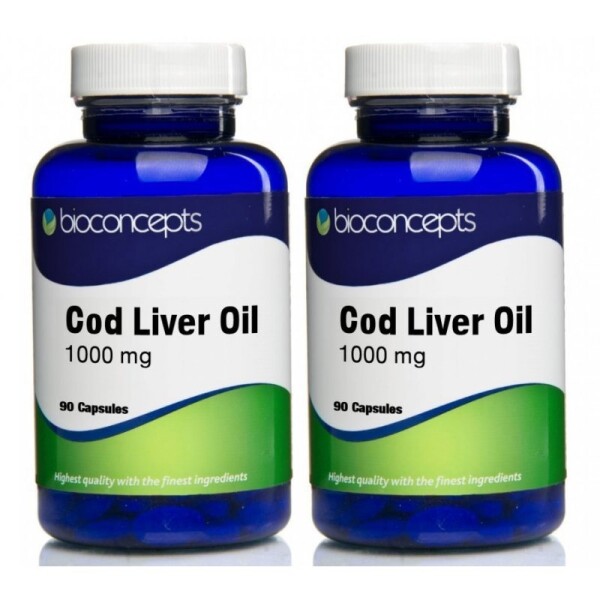
Cod Liver Oil helps maintain joint & heart health
- Helps alleviate symptoms of rheumatoid arthritis
- Maintains joint health
- Prevents/alleviates symptoms of osteoporosis
- Helps maintain a healthy heart and circulation
- Helps maintain healthy bones, skin, hair and nails
- Helps to alleviate depression
What is Cod Liver Oil?
Cod liver oil contains more vitamin A and more vitamin D per unit weight than any other common food. One hundred grams of regular cod liver oil provides 100,000 IU of vitamin A, almost three times more than beef liver, the next richest source; and 10,000 IU vitamin D, almost four times more than lard, the next richest source.
In addition, cod liver oil contains 7% each of the elongated omega-3 fatty acids EPA and DHA. EPA is the precursor of important prostaglandins, localised tissue hormones that help the body deal with inflammation; and DHA is extremely important for the development and function of the brain and nervous system. So it's no surprise that in numerous studies cod liver oil has proven to be a powerhouse in fighting disease.
Many studies have looked into the ideal combination of EPA and DHA omega 3 fatty acids and have summarised that the most effective formulation has a ratio of 1:1 or a ratio that is slightly in favour of DHA.
Our formulation does exactly that with a ratio of 1.13:1. Not all companies will give you this information as their formulations are heavily biased towards EPA or don't include any DHA at all!
How does Cod Liver Oil work? The science behind the secret…
The term "fatty" refers to the fact that omega-3 fatty acids are naturally broken down from fats, like fish oil in the case of EPA and DHA (two of the most important Omega 3 Fatty acids). Omega-3 fatty acids are believed to be essential fatty acids as your body needs them to survive, yet the body does not make them. Thus, a daily supplement of EPA and DHA should to be taken to ensure your body has enough EPA and DHA.
Specific anti-inflammatory hormones, 'Eicosenoids', come from EPA. These properties make EPA beneficial in the prevention of cardiovascular ailments, the maintenance of healthy joints and the prevention of various forms of joint problems. This is because free radicals cause damage to these cells activating an inflammatory response. By hindering the inflammatory response, EPA principally, helps maintain the health of the heart, brain and joints.
DHA is more easily absorbed in the body and used in greater amounts than EPA. Good brain function is dependent upon adequate amounts of DHA, which makes up 40% of the fatty acids in the membranes of brain cells.
Brain function may be omega-3's most vital and essential structural benefit. The cell membrane of neurons is 20% omega-3 fatty acids. As electrical signals jump from one neuron to another, they must first pass through these cell membranes. DHA is thought to make the membranes more elastic, allowing a channel to change shape and open up within them. Only DHA is flexible enough to completely perform this function.
The brain depends on DHA and EPA to create and modify neural structures. This adaptive nature of the brain is known as "plasticity". A deficiency of DHA or EPA acids reduces the adaptability of the brain. It is believed that reduced plasticity may be one significant factor in the development of depression.
Cod liver oil provides vitamin D that helps build strong bones in children and helps prevent osteoporosis in adults. The fatty acids in cod liver oil are also very important for the development of the brain and nervous system. "If you want to prevent learning disabilities in your children," said David Horrobin, distinguished medical and biochemical researcher, "feed them cod liver oil."
Scientists have also discovered that cod liver oil can repair arthritic joints as well as lubricating healthy ones. And they believe supplements could help thousands of patients waiting in agony for hip and knee replacements by beginning a reversal of the degenerative process. This is because studies show that Omega 3 fatty acids can slow down or remove the activities of the enzymes that degrade cartilage in arthritis and also keep inflammation down to a lower level.